 Cedar Pond Farms
Every location scout has lived some version of this day: the backlot barn looks right until the camera gets close. The wood is too clean. The mud is art-department mud. The animals arrived in a trailer that morning and want to go home. Everything in frame is pretending — and an audience raised on unlimited real footage can tell.
That's the short version of why farm scouting requests keep landing in our inbox. Here's the long version, from the people who run a working 31-acre Scottish Highland cattle farm in East Tennessee that also happens to host 250-guest events — which means the power, the parking, and the weather plan a production needs were already worked out before the first scout ever called.
Real weathering is the one thing a set dresser can't buy
A working farm accumulates texture the honest way: gates that sag exactly where forty years of hands have pushed them, a corn crib with slat walls the sun has grayed one board at a time, fence posts wearing lichen nobody planted. On a backlot, all of that is a paint treatment with a per-day rate. On a farm it's simply there, in every direction, in depth — so the background of your background still reads true when the director finds a new angle at 4 PM.
The animals already work here
Animal wranglers will tell you the hardest part of a farm scene is not the hero animal — it's the ambient life that makes a farm read as alive. Chickens that cross the yard on their own schedule. Cattle that graze through the deep background without being cued. Our Scottish Highland cattle are hand-fed, brushed, and photographed by guests every single day, which means they treat a camera crew as one more group of admirers. The chickens and ducks lay eggs a cooking segment can actually crack. None of it has to be trucked in, and none of it wants to leave.
One address can carry a whole call sheet
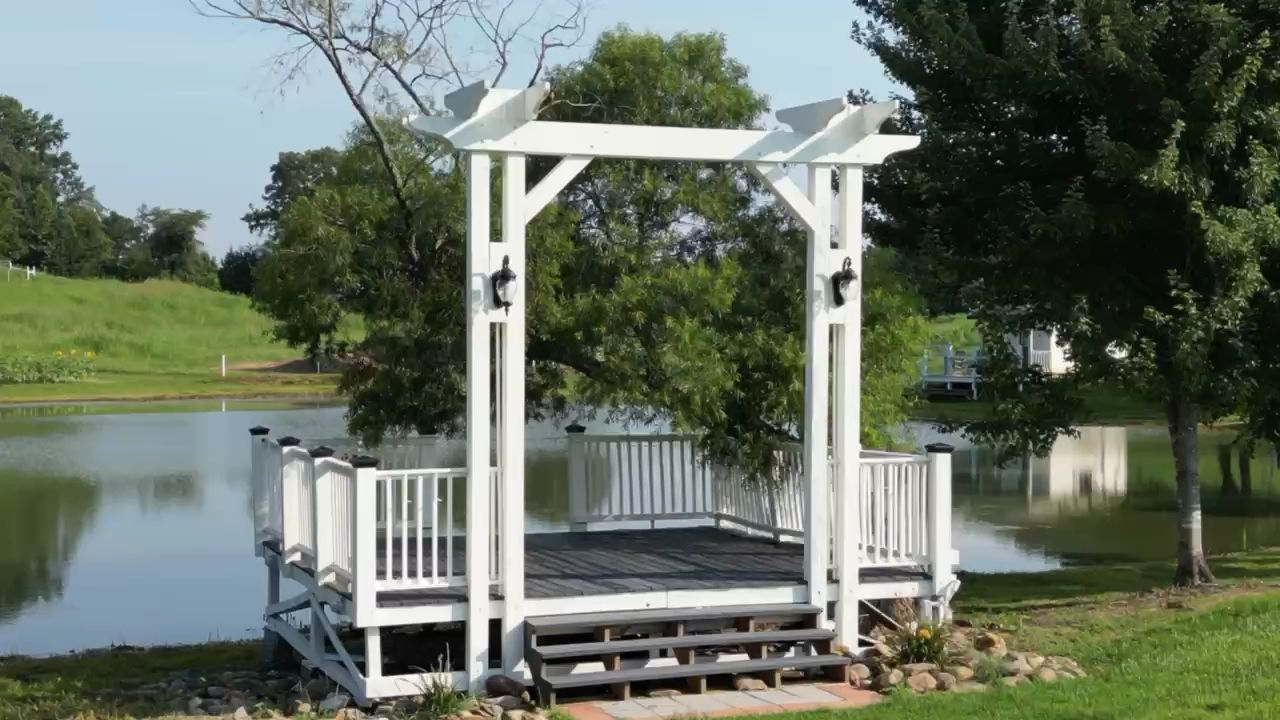
The economics of a company move are brutal: every location change costs hours of light and a convoy of trucks. The reason producers keep asking about working farms is density — a real farm stacks looks the way a backlot stacks facades, except every one of them goes 360 degrees. Ours packs twenty distinct shootable settings onto one property: a grand white event barn, a weathered tractor barn with a commercial kitchen inside, a chicken barn with a covered wagon, two docks on a two-acre pond, pasture fence lines, a greenhouse, a working beehive at the wood line, and three matching farmhouse-modern barndominiums on the ridge for interiors. A single call sheet can move between all of them without a company move.
Private property means one yes
Municipal permits, neighborhood notice windows, business-district negotiations — a city shoot spends real schedule on permission. A privately owned farm with a single point of contact compresses that to one conversation. At Cedar Pond Farms there's no municipal film permit for private-property work (county or state rules can still apply to road closures and drone work, and we'll tell you which), one owner to say yes, and a team that already runs complex event days for a living.
The production infrastructure is the surprise
The stereotype is that a real farm means roughing it. The farms that host events for a living broke that trade-off years ago. Here that means five fiber points of presence at 500/500 Mbps for video village and same-day uploads, 200-amp panels where the work happens, indoor plumbing at multiple buildings, a commercial kitchen for craft services, and on-site housing for up to 88 cast and crew — so the hotel shuffle never starts.
The honest trade-offs
A working farm is not a soundstage, and a scout should hear that plainly: roosters don't respect a sound take, weather is real, and animal areas smell like animal areas. What a good farm partner offers is not the absence of those things but the management of them — schedules built around feeding times, indoor fallbacks that have already saved rained-out weddings, and staff who can move a herd out of frame because they do it every day.
Scout it from your desk first
We built cedarpondfarms.com/film to answer a location manager's first twenty questions in one sitting — the full location list, the production spec sheet, rates, and unbranded drone flyovers you can drop straight into a pitch deck. When it looks right on the screen, send a film inquiry and come walk it in person. Golden hour over the ridge does the rest of the selling.