 Cedar Pond Farms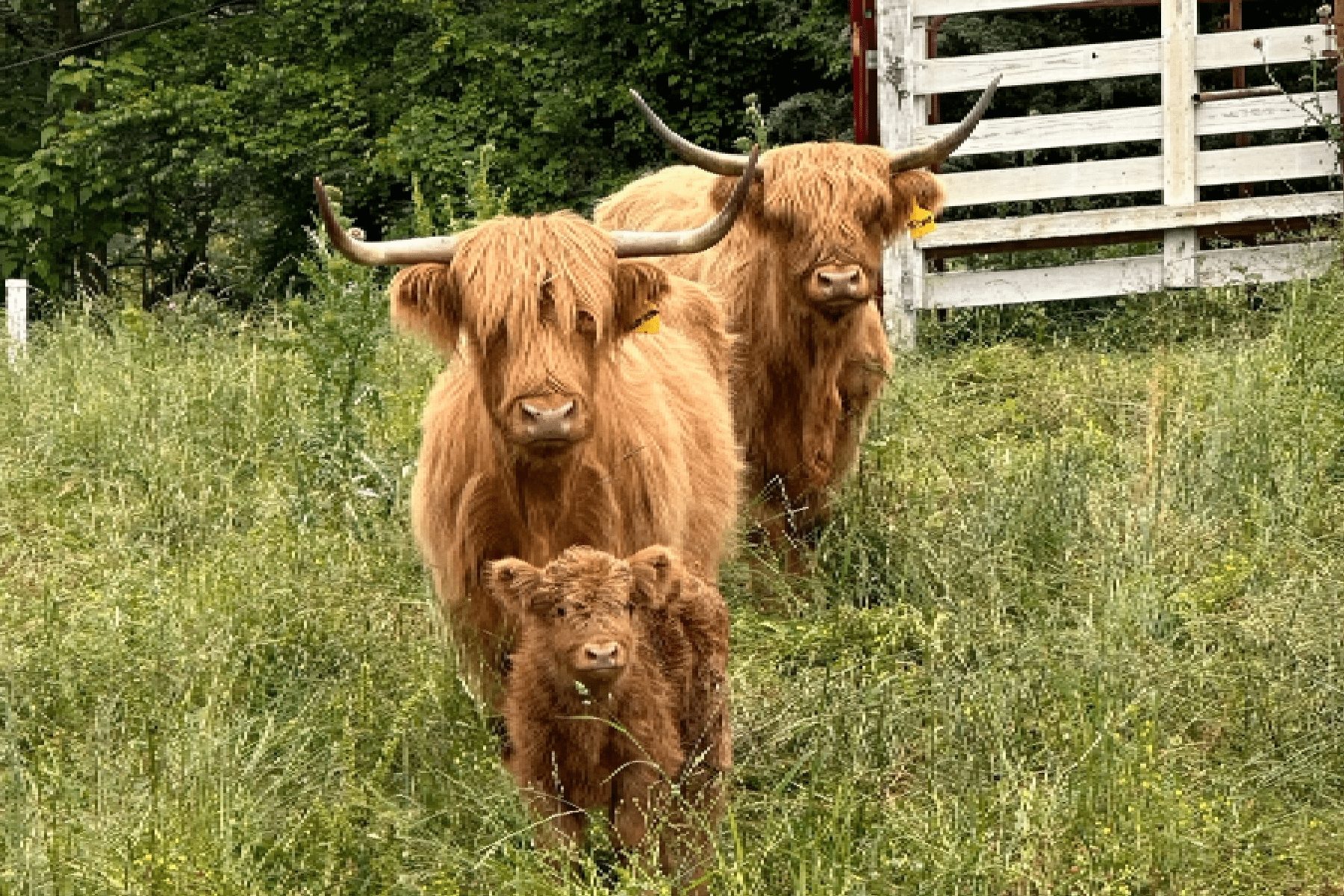
We get asked this at nearly every Fluffy Cow Encounter, usually about ten minutes after someone has brushed a Highland for the first time: “Could I keep one of these at home?” It is a fair question, and it deserves a straight answer from people who actually raise them. So here it is, before the details: if by “backyard” you mean a house lot in a neighborhood, the honest answer is no. A Highland cow is a small cow, not a big dog, and she needs land, a companion, and a county that says yes. If you have a few acres and the patience to check, keep reading, because “probably not” has a way of turning into “actually, maybe” once the numbers are on the table.
How much land does a Highland cow really need?
Plan on one and a half to two acres of pasture per cow. That is grazing land: fenced, growing grass, with water on it. It is not the lot your house sits on, the driveway, or the wooded slope behind the shed. Highlands are famously good on rough ground and will happily clear brush and saplings, but browse is a supplement, not a diet. On less than an acre a cow eats the pasture down to dirt in a few weeks, and from then on you are buying every mouthful in hay, all year, while she stands in mud.
Now the part most backyard math leaves out: you cannot keep one.
A Highland must have a companion, so the real number is two
Cattle are herd animals to the bone. A Highland kept alone paces the fence, bawls for company, stops eating well, and gets stressed in ways that make her harder to handle and more likely to get hurt. It is a standard at Cedar Pond Farms that no cow of ours ever goes to a home without a companion, and we ask about it on the very first line of the readiness quiz. That means the land question is never “one cow.” It is at least two animals, which puts you at three to five acres of pasture before anything else is on the list.
The companion does not have to be a second Highland. A miniature donkey is a classic pasture mate: donkeys bond readily with cattle, they eat far less than a second cow, they are famously watchful about dogs and coyotes, and they live a long time. A goat or a retired horse can work too. But something has to be out there with her, every day, or it is not a fair life for the animal. If two Highlands is more grass than you have, one Highland and a mini donkey is often the honest version of the dream.
| What you are keeping | Pasture you need | Why |
|---|---|---|
| One Highland alone | Not recommended at any acreage | Herd animal. She needs a companion, full stop. |
| One Highland + a mini donkey | About 2–3 acres | 1.5–2 for the cow; a donkey grazes lightly and needs a dry lot to stand on. |
| Two Highlands | 3–5 acres | 1.5–2 acres each, plus room to rest a paddock so it regrows. |
| A cow and her calf, later | Add another acre or two | A calf becomes a full grazer in its first year. |
Those are East Tennessee numbers, where grass grows most of the year. Drier country needs more; a farm with deep, irrigated pasture can get by on a little less. The direction is always the same: more land than you think.
Zoning: the phone call to make before you fall in love
Land is the first wall. The county is the second, and it is the one that surprises people. Most residential zoning either prohibits livestock outright or allows it only above a minimum lot size, often two, three, or five acres, and sometimes with a rule about how far a barn or feed area must sit from a property line. A homeowners’ association can say no even when the county says yes. And a horned animal that weighs a thousand pounds gets noticed: the neighbor who loved the idea in June may feel differently about flies, bawling, and a fence-line trail in August.
So before you look at a single calf for sale, do three things:
- Call your county planning or zoning office and ask, in these words, “Is my parcel zoned to allow cattle, and is there a minimum acreage or setback?” Get the answer in writing if you can.
- Read your HOA covenants, if you have them. “No livestock” is a common line and it is enforceable.
- Talk to the neighbors whose fences you share. A cow is a decade-long commitment; a feud with the people next door is longer.
The quiz asks about this too, because a “we’ll figure out the zoning later” answer is the one that ends with a cow being sold on at a loss six months in.
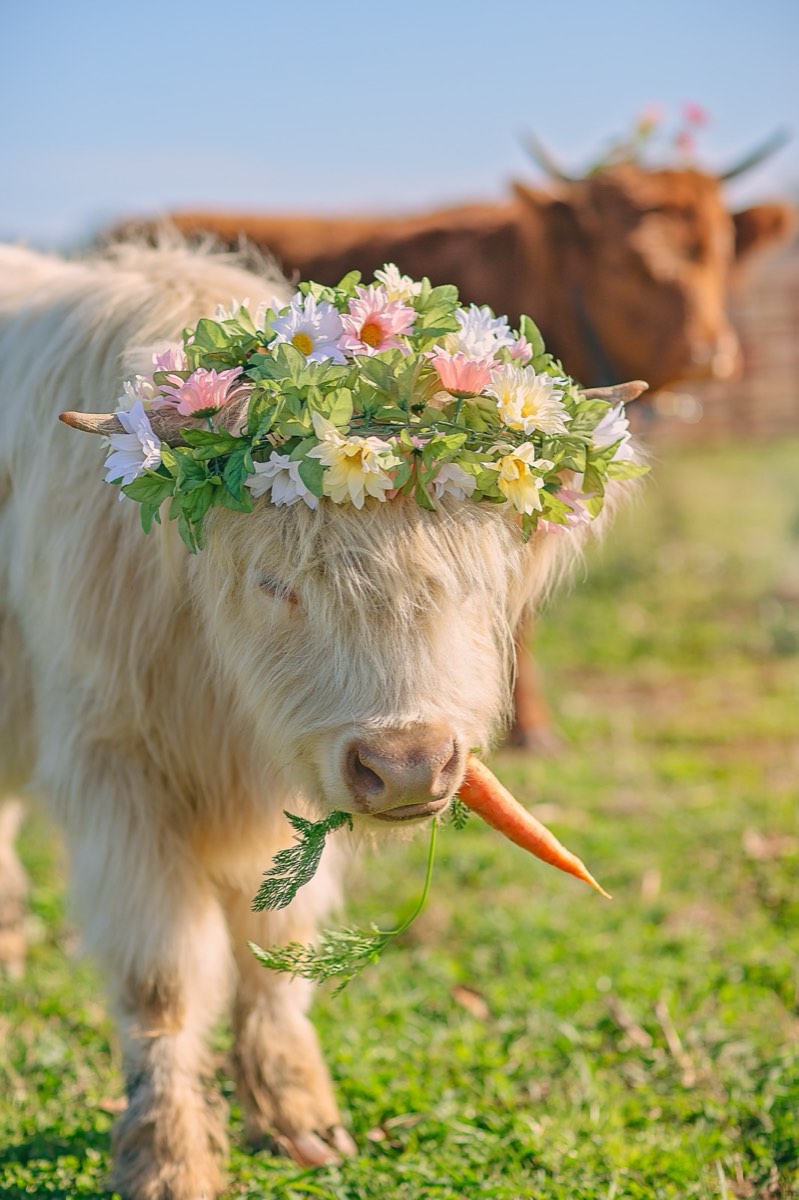
The rest of the list a backyard rarely has
Suppose the acres and the zoning both check out. Here is what a Highland needs that a house lot usually cannot give her:
- Real fence. Not a privacy fence, not a garden fence. Four to five strands of good wire or woven wire on solid posts, with a gate a truck and trailer can use. Highlands are gentle, but a thousand pounds leaning on a picket fence is a thousand pounds through a picket fence.
- Shade and water, and plenty of both. That double coat is built for a Scottish winter. In an East Tennessee July, heat is the one thing we watch every single day: deep shade she can reach on her own, cool water she never runs out of, and room to move to the breezy side of the field. A small yard with one tree is not shade; it is a hot spot with a tree in it.
- A way to handle her. Hoof trims, a vet visit, a trailer ride to the farm vet. You need a pen or a chute where she can be caught safely, and a large-animal vet within driving distance who will actually come out.
- Somewhere for the manure to go. A cow makes a lot of it. On pasture it is fertilizer; on a quarter acre it is a problem, and then it is a neighbor’s problem.
- A plan for the winter, and the next ten winters. Hay storage, a dry place to feed, and someone to do chores when you are away. A Highland lives fifteen to twenty years.
So what should a cow-lover with a small yard do?
Come brush ours. Genuinely. The Fluffy Cow Encounters exist for exactly the person reading this article: you get the fringe, the horns, the slow blink and the calm, without the fencing bill. Come as often as you like, and bring the kids to Little Farmers. If the dream is still there a year later, that is worth knowing too.
If you are one of the people with a few acres outside town and a zoning office that said yes, then this is the fun part, and we would love to help you do it right: which two animals, which fence, where the water goes, and how to get her home safely. Every Highland that leaves Cedar Pond Farms leaves with a companion and a farm guide on the other end of the phone.
Frequently asked
Can I keep a Highland cow on one acre?
Not well, and not alone. One acre is under the 1.5–2 acres a single cow needs, and she must have a companion, which means two animals on land that cannot feed one. One acre is a hay-fed dry lot, not a pasture.
Can I keep just one Highland cow?
No. Highlands are herd animals and do badly alone. A second Highland, a miniature donkey, a goat, or a retired horse all count as company. Cedar Pond Farms does not place a cow into a home without a companion.
Are miniature Highland cows a backyard option?
They are smaller, but they are still cattle: still a herd animal, still a horned animal, still subject to the same zoning rules, and still needing roughly an acre or more of pasture each. A mini shrinks the hay bill, not the list.
Do I need a permit to keep a cow?
It depends entirely on your county and your subdivision. Many residential zones prohibit livestock or require a minimum lot size, and homeowners’ associations often ban it outright. Call your county planning office before you buy anything.
Part of our complete guide to the breed — everything about Highland cows, in one place. Read next: the honest pros and cons of owning one.