 Cedar Pond Farms
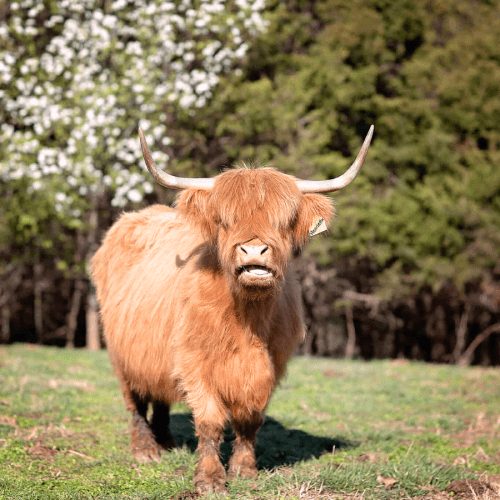
A mini Highland cow is a Scottish Highland bred down in size — same shaggy double coat, same sweeping horns, same slow-grown breed underneath, selected over generations to mature smaller. They are real animals and a real market, and that market is exactly why this page exists: most of what ranks for this search is written by somebody with a mini to sell you. Cedar Pond Farms keeps full-size Highlands and does not sell minis, so what follows is the version with nothing riding on your answer.
What counts as a “mini” Highland
There is no single official standard, but the bands most breeders and registries work in look like this, measured at the hip at maturity:
| Label | Mature height (hip) | Plain English |
|---|---|---|
| Full-size (standard) | Roughly 48″ and up | The breed as Scotland built it — cows commonly 900–1,300 lb |
| Mid-size | ~42–48″ | Smaller-framed Highlands, often from selecting small parents |
| Miniature | ~36–42″ | What most listings mean by “mini” |
| Micro-mini | Under ~36″ | The smallest band, the strongest premiums, and the most caution warranted |
The smallness comes from two places: generations of choosing the smallest sound animals, and in some lines the chondrodysplasia gene — a dwarfism gene that, doubled up, causes serious problems. Responsible breeders test for it and will show you the result without being asked twice. We wrote a plain-English explainer on the genetics that make them small if you want the full picture.
How much does a mini Highland cow cost?
More than a full-size Highland — often several times more — purely on demand. Treat any exact figure you read online with suspicion, ours included, because prices move with the market, the region and the animal. What stays true is the shape of the price:
- Smaller costs more. The premium tracks the expected mature height, which is why proof of the parents’ heights matters more than the calf’s.
- Papers cost more. A registered animal from tested, proven lines carries a premium over an unregistered one — and is usually the cheaper mistake to avoid.
- Fashion costs most. Coat-colour fads come and go; the animal underneath does not change with them.
- The purchase price is the small number. Fencing, shelter, hay, minerals, a vet who will come out, a companion animal — and fifteen-plus years of mornings — are the real cost, and they are nearly the same bill a full-size Highland runs. Why Highlands cost what they cost walks through it.
Do mini Highlands stay small?
This is the question to ask before any other, because the honest answer is: not always. A fluffy six-month-old proves nothing about mature height — every Highland calf is small. Plenty of animals sold as minis grow into perfectly ordinary mid-size Highlands, which is only a heartbreak if you were promised otherwise. Before believing a listing: ask the measured heights and ages of both parents, ask for the chondrodysplasia test, and ask how old the animal will be when the height guarantee means anything. A seller who answers all three plainly is the kind to buy from.
Are mini Highlands good pets?
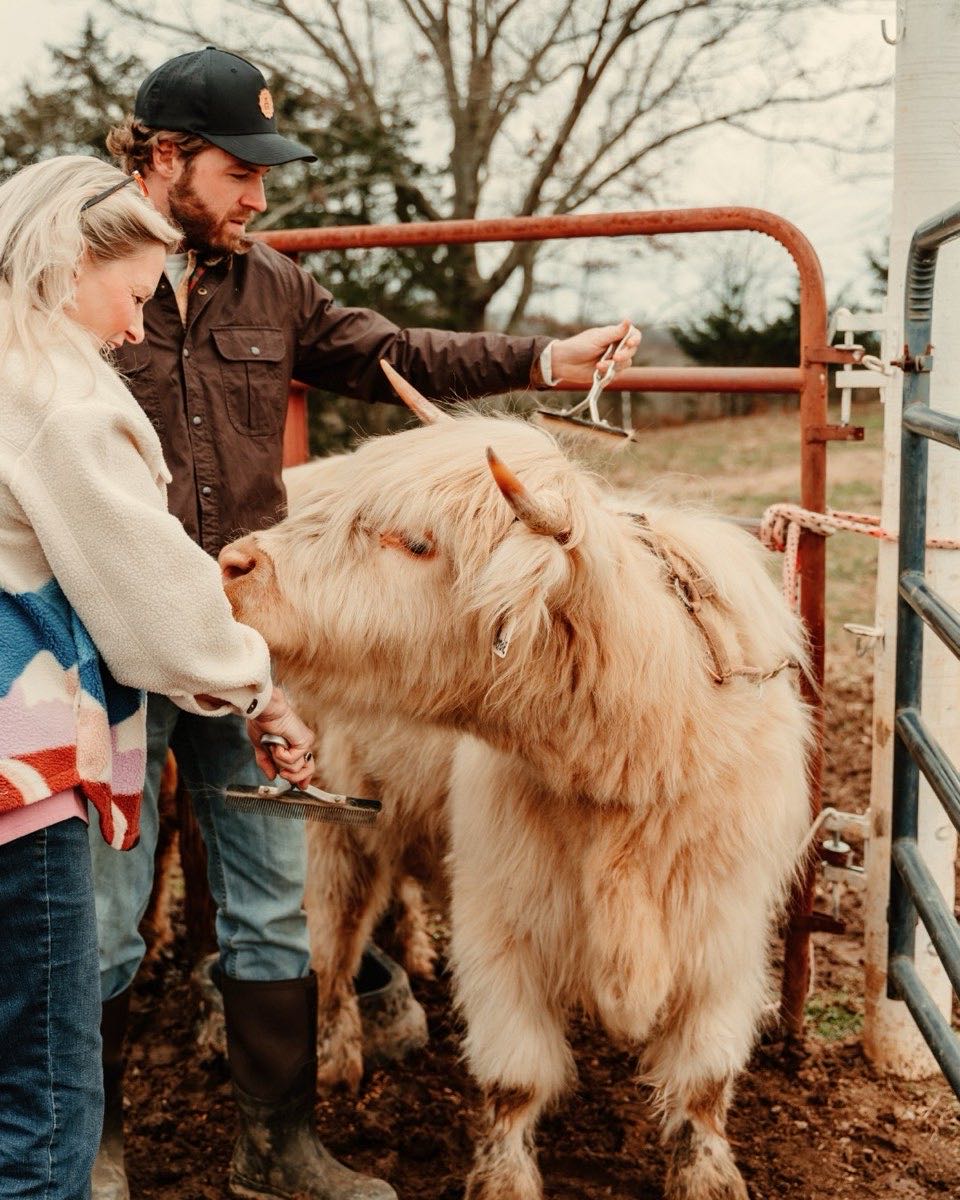
They can be wonderful animals to keep — and they are still cattle. A mini Highland is a horned herd animal that needs a bovine companion, real fencing, pasture, and a plan for two decades. The two cautions we give about our own gentle full-size fold apply at every size: a mother with a new calf wants space, and the ends of the horns are always worth respecting, on an animal of any height. If “pet” means a house animal, no Highland is one. If it means a field companion you brush on weekends — that is a real life a Highland can live, at either size, for an owner who goes in with open eyes. The pros and cons of owning a Highland is the full, unvarnished list.
Mini vs. full-size at a glance
| Mini Highland | Full-size Highland | |
|---|---|---|
| Mature weight | Commonly ~350–700 lb | Cows 900–1,300 lb; bulls more |
| Purchase price | Premium, driven by demand | Lower, driven by the working market |
| Acreage & care | Somewhat less grazing; same fences, same vet, same years | The bill the breed was designed around |
| Temperament | The breed’s docility, in a smaller frame | The same — and a 1,100 lb animal raised around people is, in practice, remarkably gentle |
The full side-by-side lives at mini vs. full-size: what’s actually different.
Why our farm keeps full-size
Because full-size is what a working pasture and a beef breed were designed around — and because the scale is most of the wonder. A shaggy, horned, thousand-pound animal that walks over and chooses to be gentle with you is an experience no photograph and no miniature quite carries. Our fold lives here in New Market, Tennessee, a short drive from the Smokies, and meeting them is the fastest way to know which version of this animal belongs in your life.
The best research on any Highland — mini or full — is an hour spent standing next to one.
Meet a Highland in person
We host small-group Fluffy Cow Experiences on the farm year-round — brushing, hand-feeding, and time in the pasture with the fold, hosted by the people who feed them every morning. What petting a Highland is really like covers what to expect before you book.
Part of our complete guide to the breed — everything about Highland cows, in one place.